

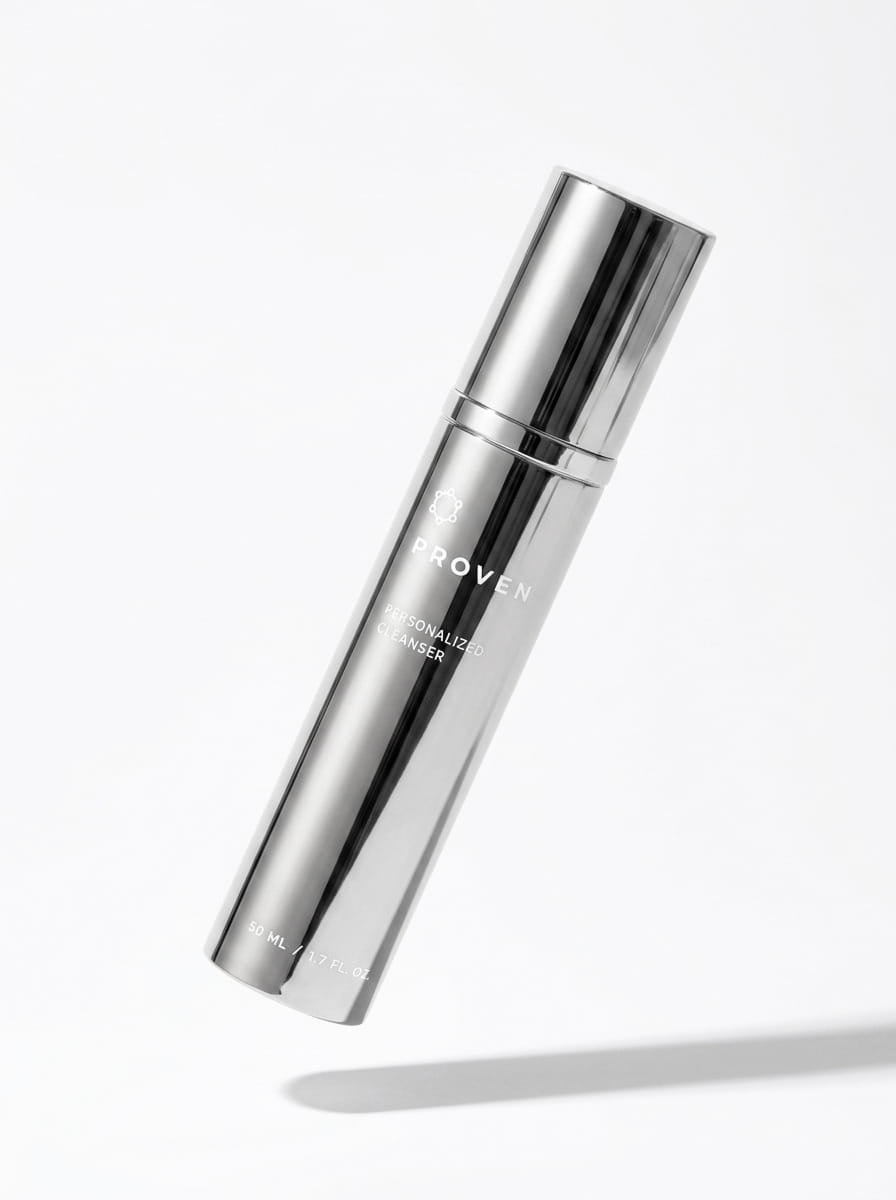
Personalized Cleanser
A gentle wash with exfoliating and toning properties — calibrated to your skin.
Compare mineral and chemical sunscreens, learn their pros and cons, and find the best option for your skin type.

Not all sunscreens will work for you. As you protect your skin from the sun, it’s important to find a sunscreen that suits your specific skin concerns. Below, we’ll break down the basics of chemical vs. mineral sunscreen so you can choose which one works best for your skin.
Soaking up the sun seems fun, but the sun isn’t as friendly as it seems. Every time you step outside, you expose yourself to the sun’s ultraviolet A (UVA rays) and ultraviolet B (UVB rays) — these can cause sun damage such as sunburn, sun spots, and more.
There is, however, a way to stay safe: sunscreen. Sunscreen protects your skin from the sun’s harmful UV rays. It contains chemical or mineral sunscreen ingredients that can block UV or convert UV into heat.
Chemical sunscreen contains chemical ingredients or compounds, such as oxybenzone, avobenzone, octinoxate, octisalate, octocrylene, and homosalate. These compounds need to be absorbed by the skin, so that when the sun penetrates it, it absorbs the UV and then turns that UV into heat. In other words, it allows UV into the skin, and then converts it before it can cause changes on a cellular level.
Since chemical SPF is absorbed by the skin, it won’t leave behind any white cast. With that said, it’s well-suited for people with a darker skin tone that make the white cast of mineral sunscreen more apparent. Or if you simply don’t want to walk around with sunscreen smeared on your face, chemical sunscreen is for you.
It can worsen rosacea, a condition where the blood vessels on the face become inflamed. In addition, due to the dissipation of heat, it can aggravate melasma, a common skin condition that causes discolored patches to appear on the skin. That’s why if you have these conditions, it would be better to use a mineral-based sunscreen as it doesn’t contain chemicals that can cause irritation.
Compared to a chemical sunscreen that’s absorbed by the skin, mineral-based sunscreen merely sits on the skin. Also known as a physical sunscreen, it provides a physical barrier between your skin and the sun’s UV rays. It prevents UV from causing sunburns, sun spots, etc. by blocking it the moment it “attempts” to penetrate your skin. That’s why mineral sunscreens are also called “reflectors”.
As its name implies, mineral-based sunscreen contains minerals such as zinc oxide and titanium oxide.
Unlike chemical sunscreens that take about 20 minutes to be absorbed, mineral sunscreens can block UV rays away from your body immediately.
If you have sensitive skin, your best bet is mineral-based sunscreen. Mineral ingredients are more gentle — that’s why they’re the go-to sunscreen for babies.
So, is mineral sunscreen better? Not always. The downside is that mineral sunscreens can be messy and may be more likely to leave a white cast. Not only are they thick, but they’re more likely to rub off, thanks to sweat. For that reason, if you’re going swimming or if you know you’ll be sweating, don’t forget to reapply your sunscreen throughout the day. It won’t last as long on your skin.
And since it sits on your skin, it will create a chalky white residue. If you’re going for that “beach” look, great! But if you’d rather have an invisible filter of sun protection, choose chemical sunscreen.
Any broad-spectrum protection sunscreen with a sun protection factor (SPF) will be able to protect your skin from the sun. When choosing between mineral vs. chemical sunscreen, you need to bear in mind that their main difference is in how they block UV. One blocks, the other absorbs. Ultimately, it’s up to you to decide how you want your sunscreen to work.
The main benefit of mineral-based sunscreen is that it’s less likely to irritate your skin. It can also sit on top of makeup, making it easier to apply and reapply. But because it may take longer to rub in, you may be more likely to have a white cast across your face.
Chemical sunscreen will absorb UV, but before the UV can cause damage to your body, it will dissipate into heat. Since it’s absorbed by your body, its advantage over mineral sunscreen is that it often rubs in easily, looking invisible. This, however, can cause or worsen skin conditions like rosacea, acne, etc.
Whether you go for the former or the latter, they will both get the job done. Just remember that for daily use, you may want to choose chemical sunscreen or a daily moisturizer with SPF. After all, you wouldn’t want to walk around the office with a white cast across your face, would you?
How should you apply sunscreen for optimal protection?
Even if you wear sunscreen, if your sunscreen habits aren’t the best, you won’t be able to provide your skin with the sun protection it deserves. Here’s how you can make the most out of your sunscreen:
At Proven Skincare, we know it seems like an impossible task to find a sunblock or skincare product that meets your skin needs to a T. What if you don’t want to walk around with a white cast of non-chemical sunscreen, but the chemicals in chemical sunscreen irritate your skin? Enter the Skincare Quiz.
When you take our Skin Quiz, we’ll use your answers to formulate custom products that contain all good ingredients. In that way, we can narrow down which skincare ingredients work for your skin and your lifestyle. Take the quiz today to find the product especially for you.
Built from 47 factors of your skin profile — a cleanser, day moisturizer, and night cream calibrated to you from the 3-step Skin Genome Quiz.
A gentle wash with exfoliating and toning properties — calibrated to your skin.
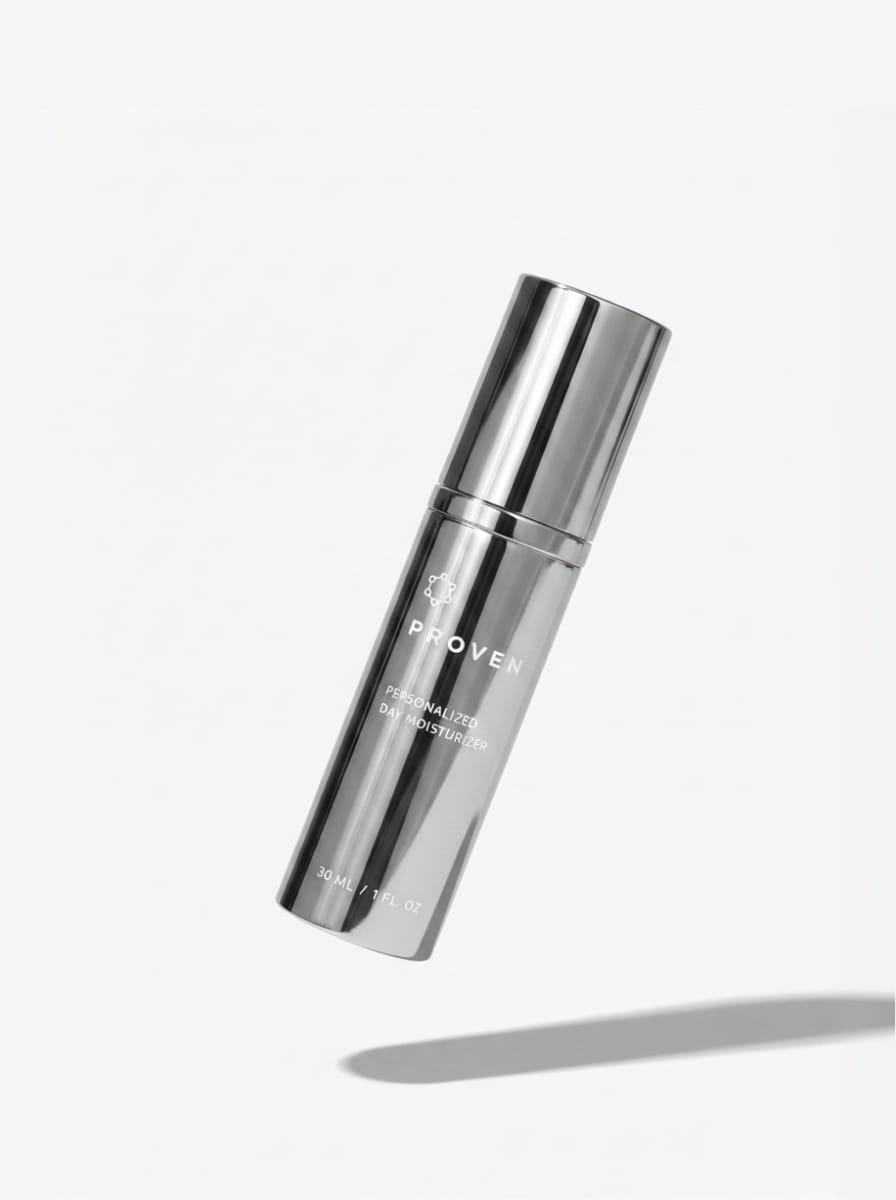
Lightweight daytime hydration — formulated for your skin.
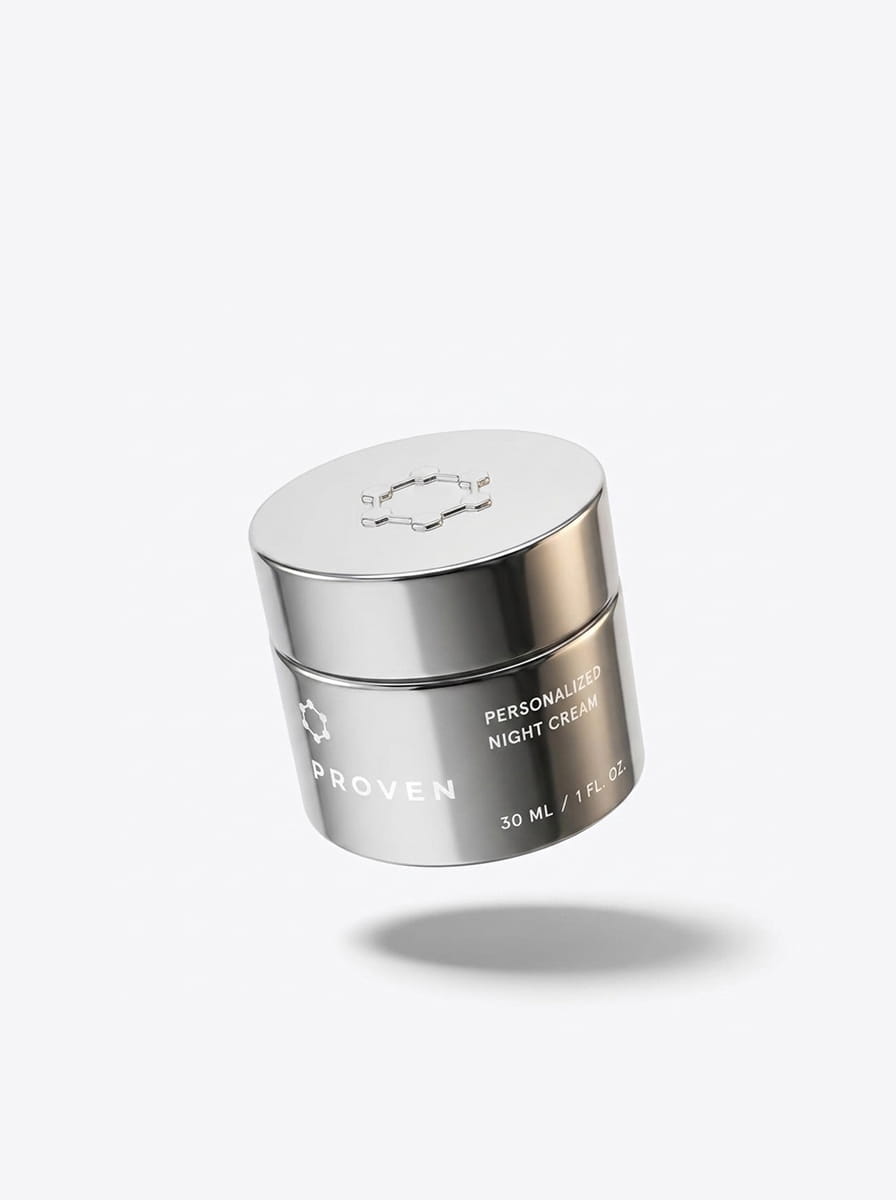
Overnight repair with the active ingredients your skin needs most.