

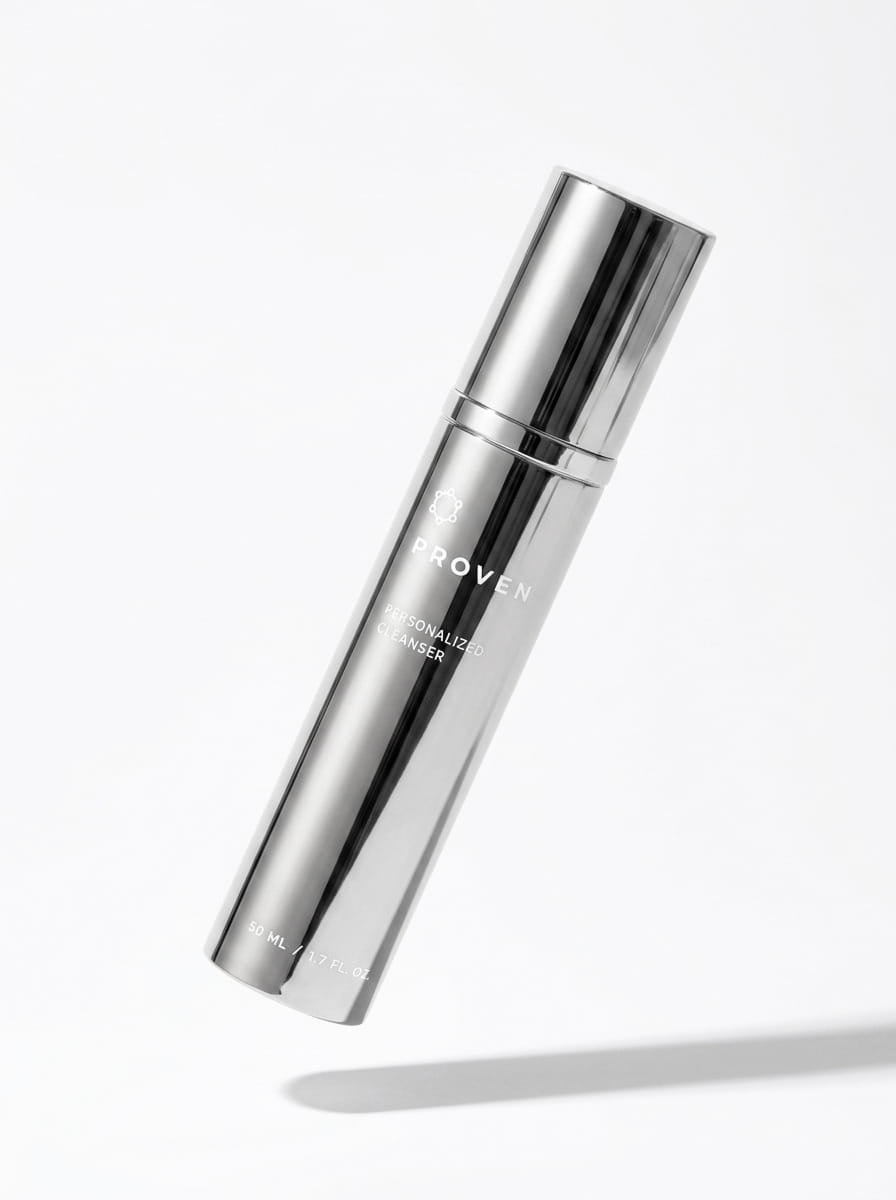
Personalized Cleanser
A gentle wash with exfoliating and toning properties — calibrated to your skin.
Just as it looks like your latest acne breakout is turning the corner, but rather than waking up with clear skin, you find your acne has only become more inflamed while you slept—and so the game of Clue begins.
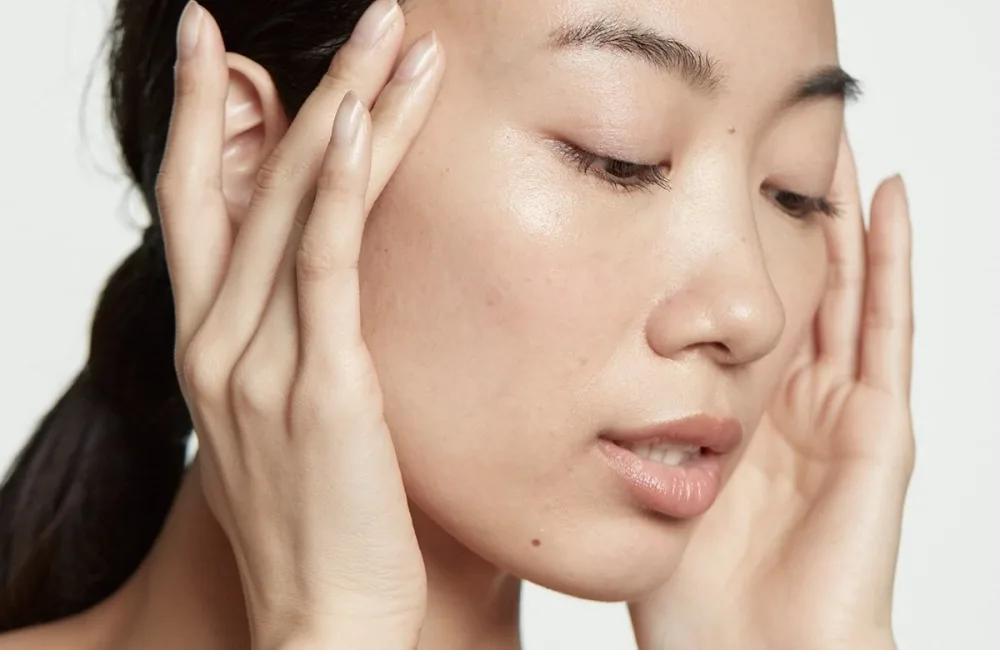
Was it a new skincare product in your bathroom cabinet? A hormonal acne surge in that monthly PMS window? That #TikTokmademetryit skincare hack that was too good to be true?
Whatever the culprit, a sudden dip in the quality of your complexion may leave you with skin concerns— whether you’re wondering how to make a pimple less red or are trying to figure out if your complexion is just misbehaving before it ultimately rebalances. Which begs the question: does acne get worse before it gets better?
The short answer? It can. But it’s crucial to know the difference between skin that’s “purging” and a more persistent problem—it can mean a world of difference to your skin.
Our bodies are complex, intelligent machines, and our pores prove it [1]. Sweat and oil pores exist on nearly every inch of our skin’s surface, from the soles of our feet to parts of our scalp that can only be seen with an acrobat’s arm and two-hand mirrors.
Pores are responsible for two main physical processes:
Pores come in a range of sizes; some are remarkably small, even impossible to see with the naked eye. This can make them susceptible to congestion with dirt, oil, and dead skin cells. When they clog, this triggers an immune response—the root cause of acne [3].
Technically, acne is characterized as a “disorder” of the pilosebaceous unit, which includes your pores, sebaceous (oil) glands, and sebaceous duct. When acne flares up, it signals something out of the ordinary is happening within this tiny physical system.
Whether your acne emerges frequently or it’s only a recent event, you probably want to know how to get rid of a blind pimple overnight using spot treatments, masks, and the like. Helpful as these treatments may be, many skincare products contain active ingredients that propel significant activity in the skin. In this transitional period, acne can become exacerbated before it clears.
The process typically unfolds in these stages:
While uncomfortable and unpleasant, this worsening process may signal that your products are working. It’s rock bottom before ascension—and, in this case, the adage “no pain, no gain” rings true.
Whether you’re an avid skincare enthusiast or dealing with your first acne flare-up ever (lucky you), you may have come across the term skin purging in conversations with friends or scrolling through social media.
“Skin purging” might sound icky, but it can be a boon for your complexion [4]. Skin purging can occur because it may take a moment for your skin to adjust to a new skincare product you’ve newly introduced to your regimen, particularly an active ingredient like retinol for acne or alpha hydroxy acids (AHAs) for a natural exfoliation treatment.
These ingredients speed up cell turnover and conduct dead skin cells, dirt, bacteria, and sebum to the surface of your skin. This can potentially provoke blemishes, either by aggravating existing acne or causing new ones like [5]:
That said, skin purging can also occur in the absence of pre-existing pimples. It may also cause your skin to peel or become abnormally dry.
But here’s the good part: once your skin has expelled the “stuff” it doesn’t want from your pores, it effectively makes space for healthy new skin cells to develop. Additionally, pimples caused by purging can often take less time to clear up than regular pimples.
Other Reasons Why Acne Might Be Getting Worse
If you’re a skincare minimalist and keep a tight skincare circle of tried-and-true cleansers and moisturizers, you might be stumped about why you’ve witnessed acne breakouts intensify. Some other common aggravators could be:
Skin Purging vs Allergic Reaction: How To Tell the Difference
Purging may ultimately lead your complexion towards clarity, but mistaking an allergic reaction for purging or worsened acne might leave your skin vulnerable longer than it needs to be.
Signs you’re having an allergic reaction often include:
The duration of inflammation can also be an indicator of an allergic reaction. Acne pre-purging and allergic reactions tend to last approximately 10 days while purging tends to “cycle out” within 28.
If you suspect you’re having an allergic reaction, stop using any new products immediately and contact your dermatologist or healthcare provider.
Usually, the effects of skin purging last for one “skin cycle,” or roughly 28 days. If you observe symptoms for more than 4 to 6 weeks, it’s best to schedule an appointment with your dermatologist.
All that said, your skin is as unique as you are. Some people’s purging cycles can last a few degrees longer or shorter than others. Suppose you can rule out other causes of the irritation in that case, patience is your best friend. Following a few golden guidelines could help speed up the process and discourage another breakout from occurring:
A final note: If you’re suffering from a breakout, it can be tempting to pile on a glut of new products in the hopes one of them will work like a charm—but try not to. Doing so may worsen your acne and the hallmark symptoms of skin purging.
Whether you’re creating a brand new skincare ritual or fine-tuning the details, the vast majority of dermatologists agree that introducing new products slowly is key. This helps to ease your skin into a new routine and can assist you in identifying products that might be behind any allergic reactions that occur later.
Ultimately, in the world of skincare, being slow, steady, and sensitized to your unique skin needs wins the race. Give new formulas a go one at a time, and you’ll be gifting your skin the opportunity to get familiar with each new treatment in its own time, on its own terms.
Whether it’s the occasional pimple or persistent severe acne, your skin is a living organ with its own rhythms and cycles—and every individual complexion is different. Establishing a personalized at-home regimen can be that bridge between you and your skincare goals—and at PROVEN Skincare, that’s precisely what we want to help you build.
Start by taking our skincare quiz to let us know about any skin issues you’re contending with. We’ll outline our top-recommended skincare ingredients for restoring balance to your complexion. We’ll build you an adaptable three-step system to bring you closer to your goals with formulas from night creams to daily moisturizers.
Every PROVEN routine is science-backed and designed exclusively for you. Take the quiz,and let us design the self-care ritual you and your skin most look forward to.
Built from 47 factors of your skin profile — a cleanser, day moisturizer, and night cream calibrated to you from the 3-step Skin Genome Quiz.
A gentle wash with exfoliating and toning properties — calibrated to your skin.
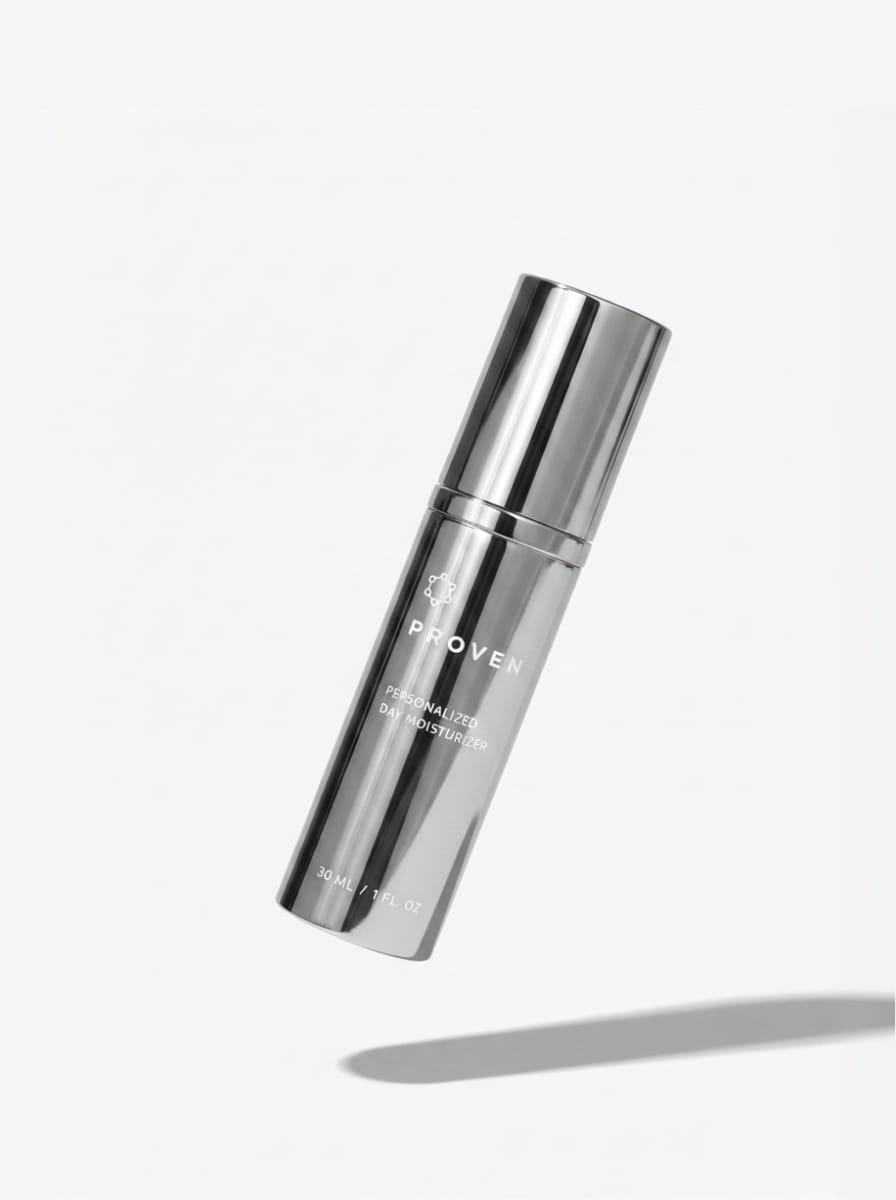
Lightweight daytime hydration — formulated for your skin.
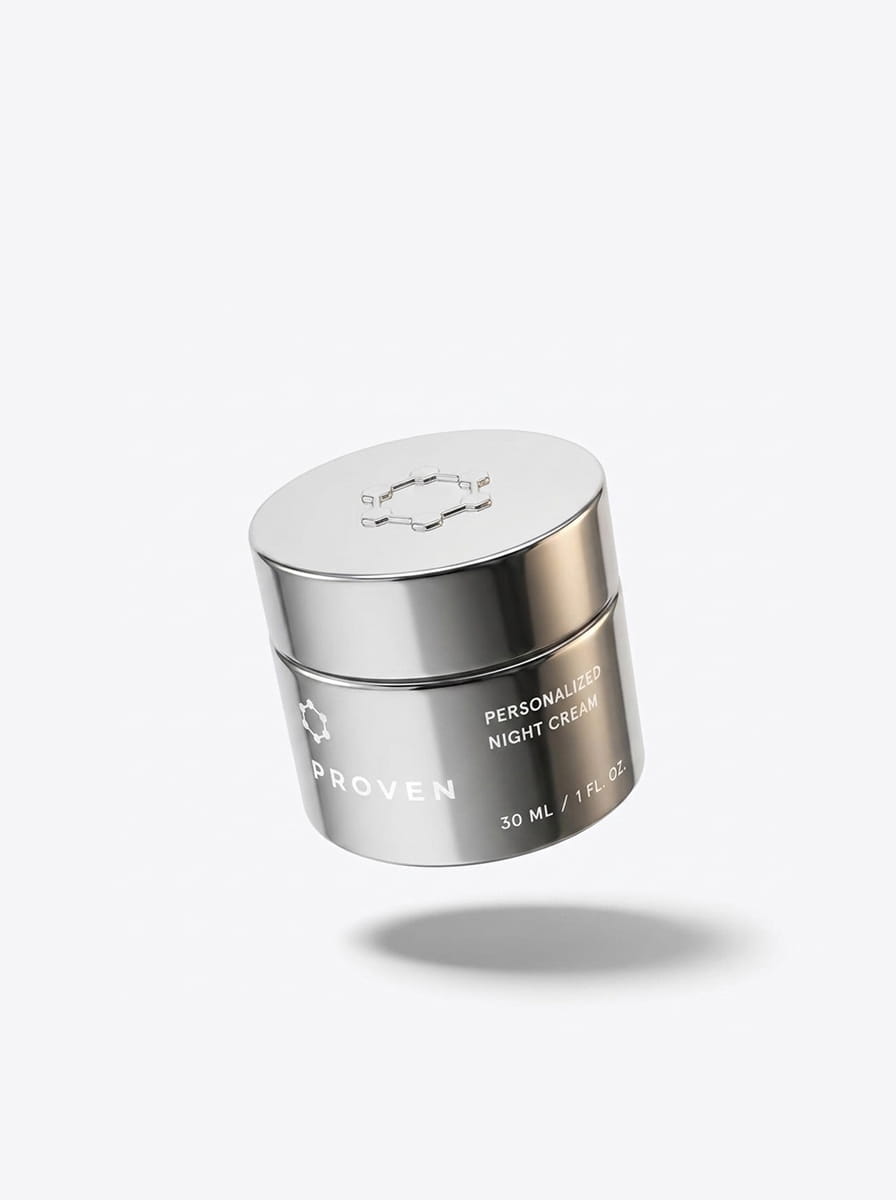
Overnight repair with the active ingredients your skin needs most.