

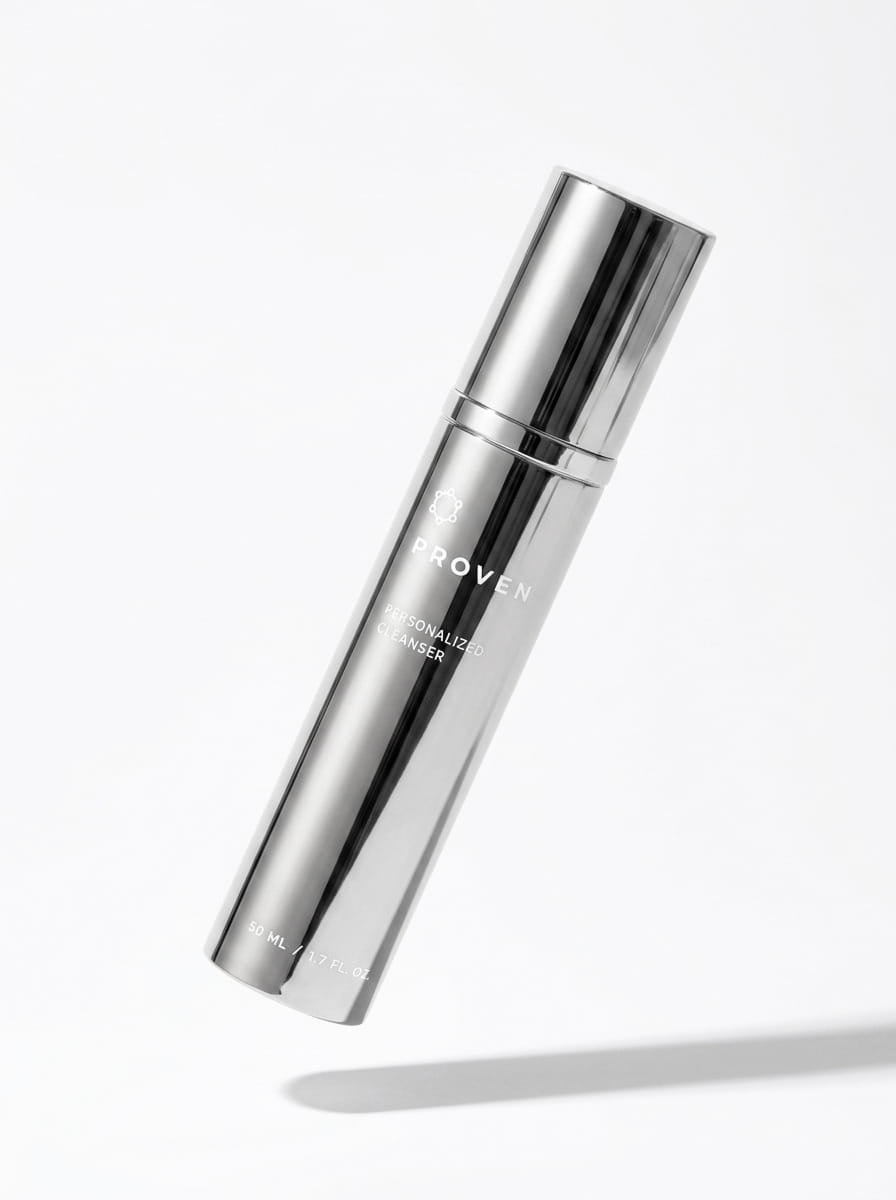
Personalized Cleanser
A gentle wash with exfoliating and toning properties — calibrated to your skin.
Learn the best ingredients for fading dark spots and how to use them in your skincare routine for even skin tone.

We all want that inner glow—you know, the one that makes your face just light up with nine-hours-of-sleep freshness. However, years of sunshine or teen breakouts may have left behind some less-than-bright spots. How can you let that natural light shine from ear to ear?
First, let’s start with the causes of dark spots on your face. A multitude of reasons like insufficient sun protection, hyperpigmentation, naturally aging, and more. Whether from natural aging or sun exposure, dark spots can be reduced (and even reversed) through skin care. It just takes the right ingredients! Let’s dive into these seven best ingredients for dark spot treatment and PROVEN’s personalized approach to your skincare regimen.
We all want that inner glow—you know, the one that makes your face just light up with nine-hours-of-sleep freshness. However, years of sunshine or teen breakouts may have left behind some less-than-bright spots. How can you let that natural light shine from ear to ear?
First, let’s start with the causes of dark spots on your face. A multitude of reasons like insufficient sun protection, hyperpigmentation, naturally aging, and more. Whether from natural aging or sun exposure, dark spots can be reduced (and even reversed) through skin care. It just takes the right ingredients! Let’s dive into these seven best ingredients for dark spot treatment and PROVEN’s personalized approach to your skincare regimen.
It’s not just for your fruit plate. Vitamin C is a powerful topical ingredient that smooths and moisturizes your skin—and it can even fade dark spots.
Vitamin C slows the enzyme tyrosinase and decreases melanin production. This means it can help to even out your skin tone of its dark spots and prevent any future discoloration.,
Even better? Vitamin C is an antioxidant, which means it removes free radical molecules that deplete skin health. When applied topically, vitamin C fends off those aging free radicals to improve your skin’s:
And the best part? As an essential nutrient, Vitamin C is tolerated incredibly well by most skin types. Do anti-aging creams work? Our personalized three-step skincare set offers a highly potent form of this topical superstar, so you can soak up its powers in your sleep.
Ever had a friend just rave about their chemical peel? Odds are, that intensive treatment included glow-ifying glycolic acid.
Glycolic acid is an alpha-hydroxy acid, or AHA. These chemical exfoliants encourage your skin to shed its dead skin cells and push healthy new cells to the surface. The result? Fresh, strong, and bright skin—which can possibly replace any hyperpigmented cells on the surface. Besides lightening a dark spot, glycolic acid can also help:
Thanks to its anti-acne properties, glycolic acid is an excellent choice in a skin care product for those with acne and dark spots. However, don’t go too hard with any AHA. If overused, glycolic acid can leave your skin irritated, swollen, and red. Stick with skincare products that have 10% glycolic acid or less for a safe start.
It’s not an AHA, it’s not a vitamin derivative—it’s a new kind of brightener. If you have sensitive skin with dark spots, consider the gentle power of azelaic acid.
Azelaic acid is topical acid derived from barley, wheat, and rye (maybe that’s why they call it a dicarboxylic acid). Like vitamin C, it cuts down the skin enzyme tyrosinase to lower melanin production. As a result, azelaic acid can help reduce a small dark mark or dark spots in the present and future.
Compared to glycolic or lactic acids, azelaic acid has a higher pH that’s gentler on skin texture. However, that doesn’t mean it has zero exfoliation powers. Azelaic acid is also keratolytic—a.k.a., it breaks down the protein keratin. By cleaning excess keratin out, it can help you avoid acne-causing bacteria or clogged pores.
Make sure to also visit a board-certified dermatologist or another skincare professional if you’re curious about dark spot treatment with chemical exfoliators. Overloading your skin with acids can cause irritation and further breakouts.
Enter a hot new player in the skincare world. This topical form of vitamin B3 is the precursor to two essential skin-renewing enzymes, one being the healing NAD+. By boosting this enzyme, niacinamide can significantly reduce hyperpigmentation and melasma, even in just 4 weeks.,
Just like vitamin C, niacinamide is also an antioxidant—which means its skin benefits are pretty much endless. By fending off damaging free radicals, niacinamide could help:
Count mushrooms or soy sauce in your favorite foods? Then you are directly responsible for keeping kojic acid on skincare shelves. This ingredient is a natural byproduct of certain foods and fermentation, and it has some intense skin brightening powers.
Thanks to its high strength, kojic acid has a reputation as a “skin bleaching” agent. However, that doesn't mean you can’t safely use kojic acid to brighten up. Just like vitamin C and azelaic acid, kojic acid safely reduces dark spots by lowering melanin production. To avoid irritation, start with the FDA’s advice to only apply concentrations of 1% or less.
Even better, research shows that kojic acid can help your skin with:
Mention retinoids, and you’ll likely hear some rave reviews. That’s because this unique family of skincare ingredients is like having baby-smooth skin in a bottle. One of its greatest benefits? Brightening the skin.
Retinoids are derivatives of vitamin A, and include several different forms like retinol, tretinoin, and retinoic acid. By boosting skin cell turnover (the rate that your skin replenishes its dead cells), they essentially turn back the clock. With time, retinoids can work their magic to replace old hyperpigmented cells with fresh, bright, and healthy new skin.
While retinoids do take more time to show results—anywhere from 6 weeks to 12 months—they are worth the wait. Other research-backed benefits of retinoids include:
No, sunscreen won’t reverse any dark spots—but it definitely can prevent future ones.
Photoaging, or skin damage from the sun’s UV rays, is responsible for 90% of visible skin damage. Part of that damage may include dark spots, possibly even leading to precancerous actinic keratosis spots. In short, that care-free afternoon under the sun just isn’t worth the risk.
To prevent worsening and developing photoaging dark spots, experts recommend wearing a facial sunscreen every single day—no skips. According to the American Academy of Dermatology, the best type of facial sunscreen is:
Before crafting your “glow up” routine, you should ask one last question—what are those dark skin spots, anyway?
All dark spots are considered hyperpigmentation, a skin condition where excess melanin (the molecule that creates skin pigmentation) builds up in the skin. While they’re commonly called “dark spots,” areas of hyperpigmentation can actually appear in a rainbow of colors, including:
Some hyperpigmentation is completely natural and expected—it’s a normal part of how your skin changes over time and with age. However, aging is a secondary cause of dark spots. Underneath, there’s always a direct reason why those little patches pop up—whether it’s a lifestyle habit or a medical condition.
What Causes Dark Spots?
To find your best glow-ifying ingredient, it can help to identify the source of your dark spots. Consider which common cause may create any dark spots on your skin:
Whether you have melasma or spent years without SPF, there’s good news—dark spots are treatable. Even better, they’re treatable from home with ingredients you can find in quality skincare.
Your skin is more than a reflection of your inner beauty—it’s a reflection of your health. And at PROVEN, we believe that everyone has the right to make their skin feel 100% from the inside-out. Whether you’re chasing a brighter complexion or tackling under eye wrinkles, we’re here to make your skincare all about you.
Ready to say bye-bye to those sun spots? Find your personalized routine with our three-minute skin quiz. With our toolkit of effective active ingredients (everything from arnica to retinol), we’ll create a special personalized formulation just for you to address your top skin concerns. All it takes is three simple steps—day moisturizer, night cream, and cleanser. That’s it.
Your best skin is just three minutes away. Take our quiz now to shine brighter with PROVEN.
Built from 47 factors of your skin profile — a cleanser, day moisturizer, and night cream calibrated to you from the 3-step Skin Genome Quiz.
A gentle wash with exfoliating and toning properties — calibrated to your skin.
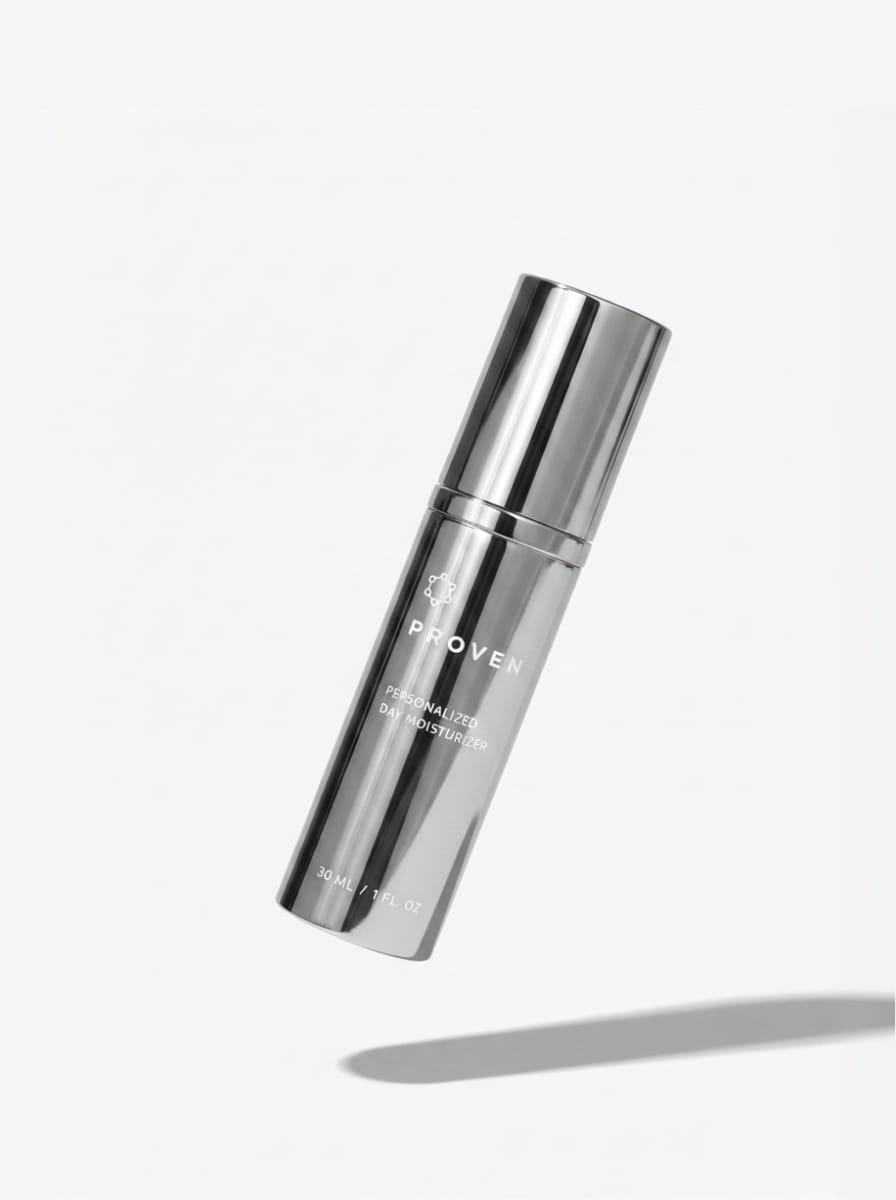
Lightweight daytime hydration — formulated for your skin.
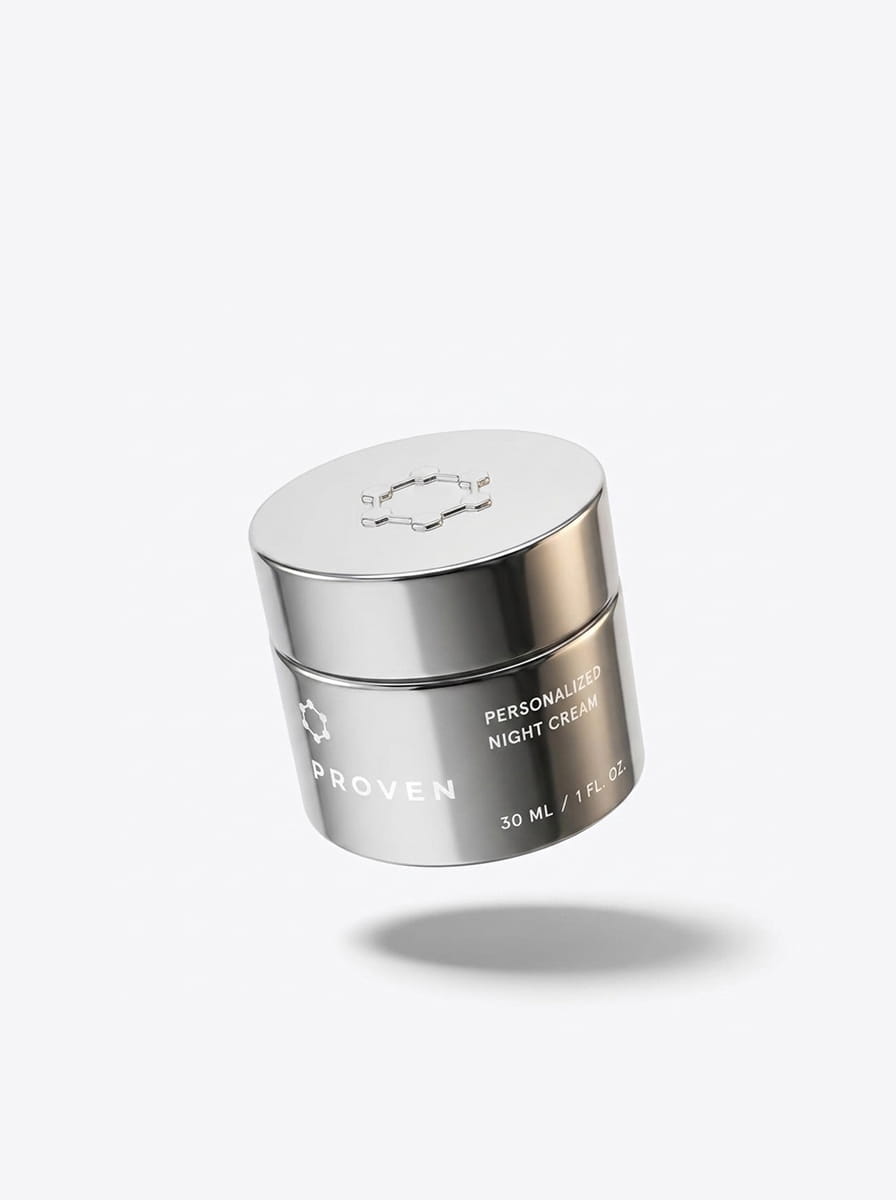
Overnight repair with the active ingredients your skin needs most.