

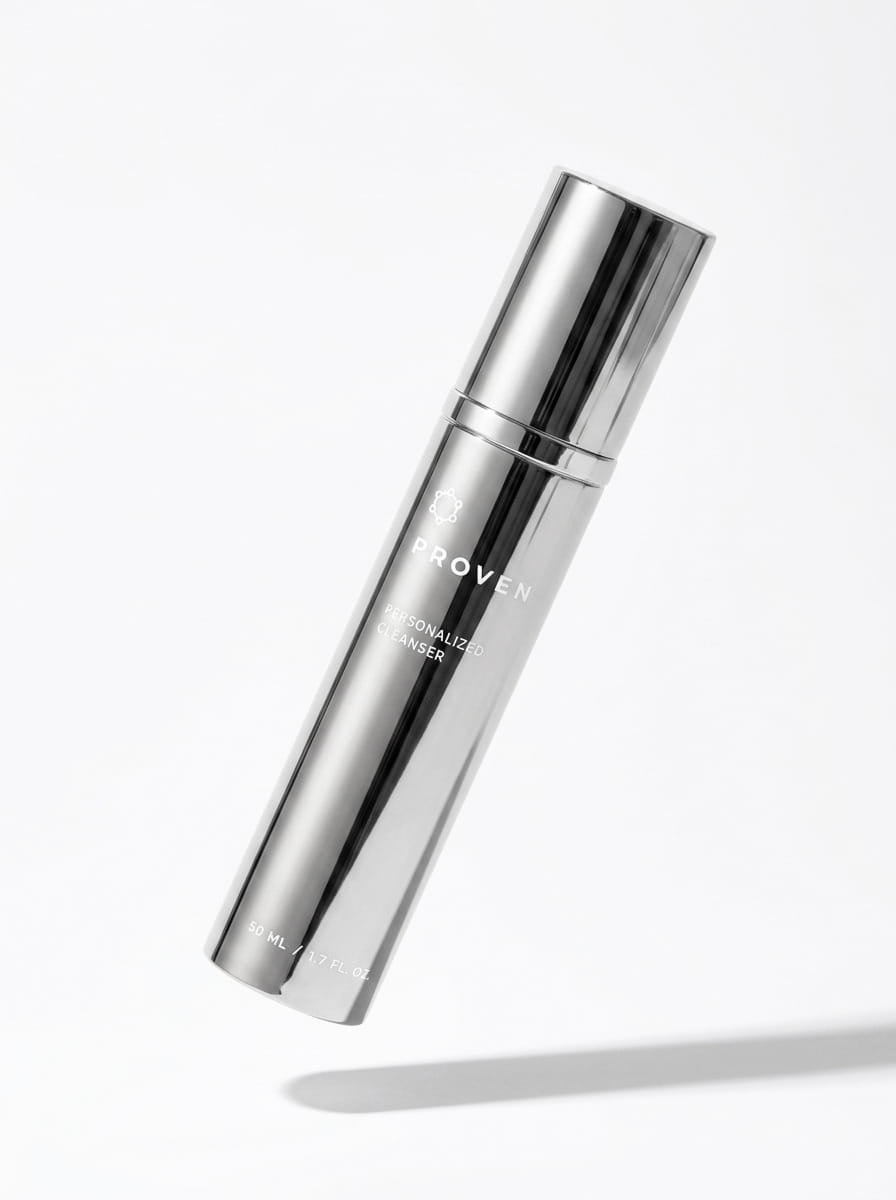
Personalized Cleanser
A gentle wash with exfoliating and toning properties — calibrated to your skin.
Want to restore firmness to your skin? Science may have a solution. Read on to learn all about sagging skin.
If there is one part of the natural aging process, we all experience, it’s sagging skin. And while getting older is something to be celebrated, the appearance of drooping eyelids is seldom welcomed. The rate at which your skin begins to slacken is affected by several factors. Most people start to notice a loss of elasticity by their late 30’s, but age-related sagging skin can be hastened by environmental stressors, smoking, UV exposure, pollutants, and significant weight loss.
Sagging skin on the lower face and thin, droopy skin on the neck are two of the most common aging concerns. Why, with the passing of years, does skin on the face and body begin to head south? These are the main factors:
As you grow older and your skin continues to age, it will lose two very important proteins that are manufactured in the dermis, the middle layer of your skin: elastin and collagen.
Elastin is what provides the skin with its ability to bounce back whenever it is stretched. Collagen is produced by fibroblasts and maintains the structure and firmness of skin.
While the production of both of these proteins will decline during the aging process, certain external factors can make them deteriorate faster, including:
When you carry around extra weight, the combination of gravity and stretching can cause damage to the collagen and elastin fibers of your skin. This will make it more difficult for the skin to return to being taut and firm.
Losing a significant amount of weight, 100 pounds or more, can result in significant amounts of saggy skin as well.
Additionally, undergoing rapid weight loss, such as gastric bypass or other bariatric surgeries, might result in larger amounts of drooping skin.
Since younger skin will naturally have more collagen and elastin production, your age during the time of the weight loss will play a major factor with influencing how saggy your skin will become.
Similar to the effects of weight loss, pregnancy will typically result in some degree of saggy and loose skin.
Nearly 90% of women will experience significant and complex skin changes due to pregnancy. The rapid fluctuation of weight gain during a pregnancy and weight loss after a pregnancy can result in loose and saggy skin.
Women that carry multiples, such as twins or triplets, will most likely see an increase in sagging skin around their abdomen that those with just one baby. The age during the pregnancy will also play an influential role in the skin’s overall sagginess.
You can’t hold back the aging process forever, but you can prevent premature skin laxity with the following:
The skin repairs itself while you snooze. Experts recommend a minimum of 8 hours per night, but 9 is even better.
Smoking causes free radical damage in the skin, which leads to premature wrinkles and sagging
Too many refined carbs and sugars lead to inflammation and premature cell damage, which accelerate collagen and elastin loss. Nutritionists also recommend nuts, fatty fish, avocado, and asparagus-- foods that trigger natural collagen production.
Research indicates that moderate amounts of exercise can boost immune system function and improve circulation, helping to keep skin taut.
Use a broad-spectrum sunscreen every day to prevent cellular damage from UV radiation
Dehydrated skin is not able to restore itself properly or continue producing new collagen
Exfoliate with an alpha hydroxy or beta hydroxy acid to ward off oxidative damage, slough off dead skin cells, and restore a healthy glow
Choose products that protect against free radical damage, improve collagen production, and boost cellular turnover. Standout ingredients for fighting sagging skin on the face include Vitamin C, Vitamin E, Retinoids, Niacinamide, Hyaluronic Acid, and Peptides.
Prevention is always the best treatment, but if you are already experiencing saggy skin then don’t worry. There are plenty of treatments available that can help out:
A study in 2015 found that endurance-based exercises could help to lessen the effect of age related changes to skin. Increasing your amount of exercise can help to improve tissue metabolism and reduce severe changes to your skin.
Working out with weights, machines, or resistance bands will help to increase your muscle mass and tighten your muscles, helping to reduce the appearance of sagging skin.
Pilates is an effective workout for tightening and strengthening the body’s core, glutes, arms, and legs.
Additionally, you should work out your facial muscles, too, in order to help reduce the saggy skin that may have formed around your chin, jowls, and throat. The best exercise for this would probably be the simhasana, Lion Pose, but there are many others that can help.
Increasing your amount of exercise can help you to lose more weight. While that may seem counterintuitive since losing weight can lead to saggy skin in the first place, losing the stubborn subcutaneous fat found in problematic areas can help to firm up the skin.
The easiest treatment on this list, massaging loose skin can help to increase the blood flow to the area and help elicit a natural anti aging response. The increased blood flow, brought into the area by massage can help to stimulate the fibroblasts responsible for the production of connective tissues that help to keep your skin firm.
It’s also possible that undergoing a massage will increase the production of mitochondria, which play a crucial role in the metabolism of tissues and cells.
One study showed that using an oscillating massage tool, in conjunction with anti-aging skin creams, helped to amplify positive effects of the cream.
Cosmetic surgeons and dermatologists can perform several non surgical procedures that can help to reduce loose skin. While they may not be effective for severe cases, they can help boost the production of collagen and elastin to help restore skin to a more firm and taut appearance.
These procedures include:
Ultrasound -- Using micro focused ultrasound will focus on the deepest layers of the skin and should provide noticeable skin tightening within two to six months of the first treatment.
Laser treatments -- Laser treatments focus on the outer layer of the skin, called the epidermis. Results should be noticed after three to five treatments and could take two to six months. This procedure is especially effective on the upper arm area and belly.
Radiofrequency -- The non-surgical form of radiofrequency will use a device placed against the skin in order to heat up the tissues underneath. While most people will see results after just one treatment, it will probably take six months for the treatment to take full effect. With the right skin care, the results can last for up to three years.
Ultrasound -- Using micro focused ultrasound will focus on the deepest layers of the skin and should provide noticeable skin tightening within two to six months of the first treatment.
Laser treatments -- Laser treatments focus on the outer layer of the skin, called the epidermis. Results should be noticed after three to five treatments and could take two to six months. This procedure is especially effective on the upper arm area and belly.
Radiofrequency -- The non-surgical form of radiofrequency will use a device placed against the skin in order to heat up the tissues underneath. While most people will see results after just one treatment, it will probably take six months for the treatment to take full effect. With the right skin care, the results can last for up to three years.
Outside of maintaining a healthy lifestyle and wearing SPF 35 daily, your best weapon for keeping the facial skin firm is using quality skincare products formulated just for you. At PROVEN Skincare, we only use clean, evidence-based ingredients that are curated according to your skin genome. Get your custom products by taking our 3-minute skin quiz.
Concerns, lifestyle, climate, and sleep — all covered in your formula.
Updates with your skin, life, and seasons. Every reorder.
Independent clinical study — brighter, more radiant skin.
By Stanford scientists. 28M data points behind every formula.
100K+ personalized formulas served. 30-day money-back guarantee.
A cleanser, day moisturizer, and night cream — calibrated to your skin from the 3-step Skin Genome Quiz.
A gentle wash with exfoliating and toning properties — calibrated to your skin.
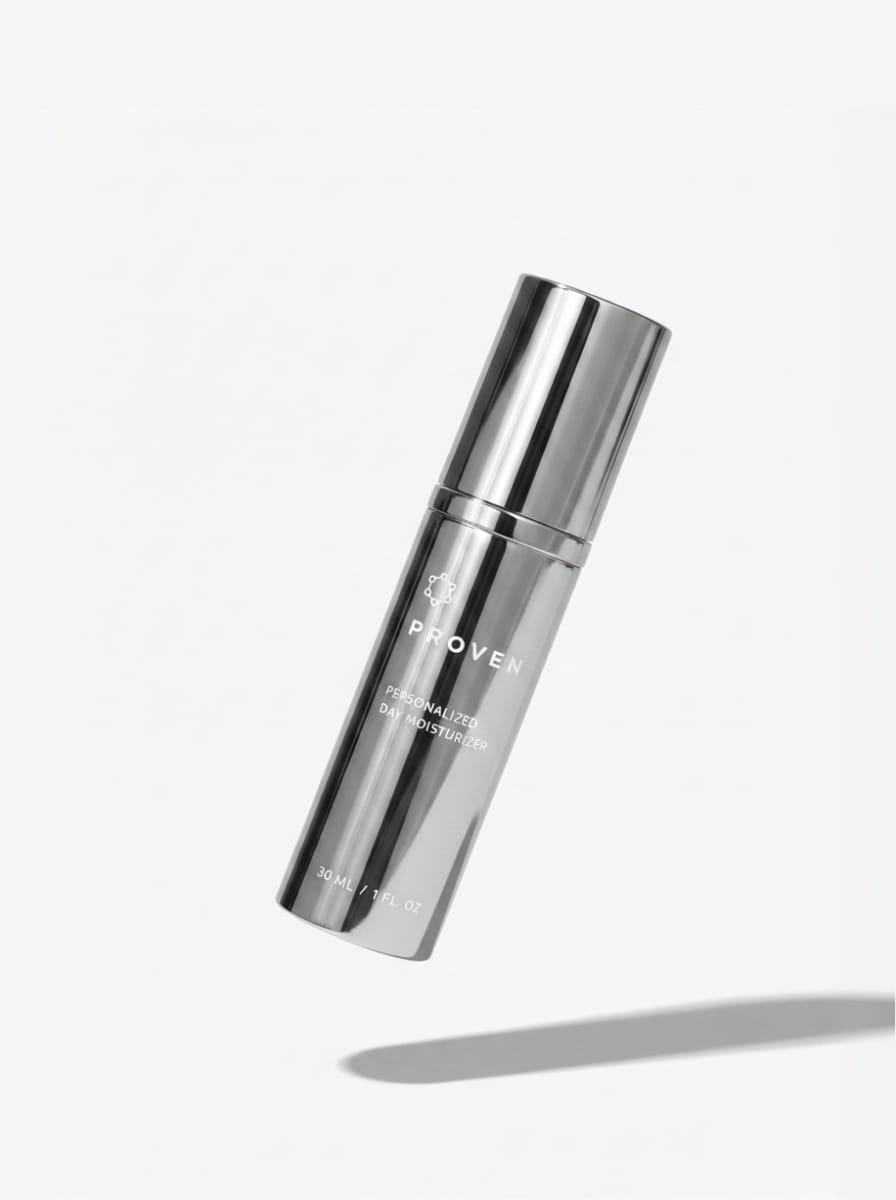
Lightweight daytime hydration — formulated for your skin.
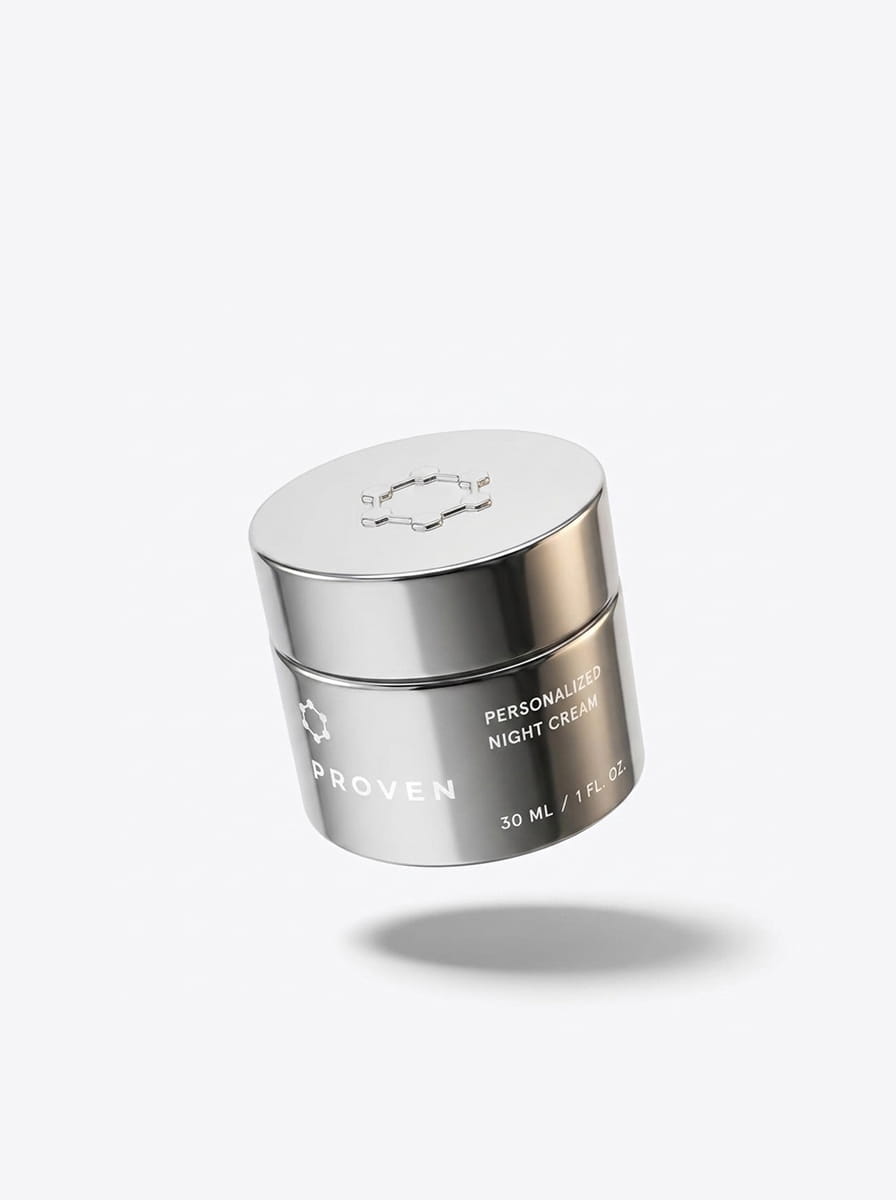
Overnight repair with the active ingredients your skin needs most.
Your formula does the heavy lifting on firmness and elasticity. A few daily habits protect that work, and the whole routine starts with the quiz.
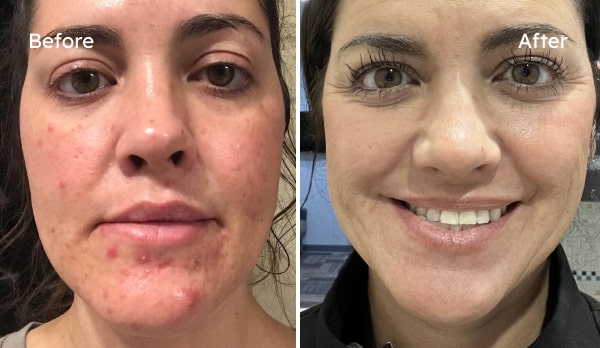
“It’s so clear and I can go without makeup and it looks amazing. I used to be so ashamed to walk around with no makeup, had terrible acne! This has been a game changer for me!”
Persistent inflammatory acne + barrier disruption = gentle sebum balance + barrier rebuild system.